


August 9, 2022 - Merus Power
Share:


The energy revolution, the complete overhaul of energy production and consumption, is currently underway at a high-speed to reduce carbon dioxide emissions and combat climate change. Efforts are being made to get rid of fossil fuels, decentralized electricity distribution is increasing and relying even more on renewable energy. Due to wind and solar energy production, weather dependence, and fluctuations in electricity consumption, customers must be allowed flexibility in their electricity consumption in the future by timing their consumption peaks smartly.
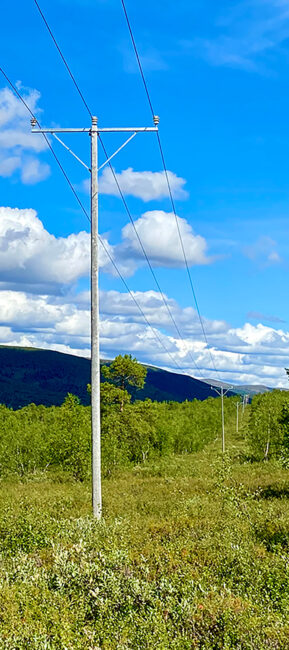
We are heavily dependent on a stable electricity grid in our daily lives and businesses, so the security of electricity supply is vital. Security of supply depends on the reliability and stability of the transmission and distribution network. More precisely, on how well these distribution network companies are able to prepare for power outages that can last up to 6 hours in more populated areas and 36 hours in rural areas. However, in many rural areas, securing the security of supply is a challenge. In these areas, electricity distribution is traditionally provided by overhead lines, which are more susceptible to various weather phenomena. A typical way to improve supply reliability is to build underground cables, but the downside is that this method is 1.5-2 times more expensive than building an overhead line.

We aim to answer this question in this blog. We offer distribution companies the option to replace underground cabling in rural areas with battery energy storage systems which prove to have more benefits. In the blog we discuss:
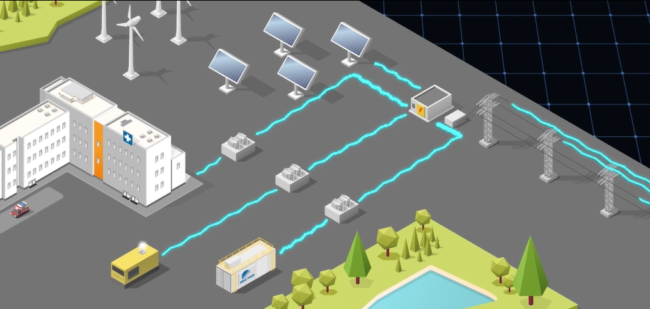
Yes, there is. Merus Power offers a cost-effective alternative to underground cabling to improve supply reliability. Merus™ ESS battery energy storage system can detect an interruption in the electricity distribution in an instant. In the event of a fault, our advanced energy storage can separate the network it protects into its own island and restore the customers’ voltage in a controlled and fast manner. Consumers only experience a very short interruption in their electricity supply, comparable to automatic recloser operation time.
Our energy storage allows the distribution network company time to locate and fix the fault, without the customers suffering from electricity distribution interruptions. Merus™ ESS automatically synchronizes the island network with the supply network and closes the island circuit breaker when the fault in the network is repaired or isolated, and the voltage is restored. Merus™ ESS is responsible for network protection both in everyday situations and island-mode operations.
An interruption or error in electricity distribution incurs costs for both the customer and the grid company. The grid company’s incurred costs consist of the costs of repairing the fault, as well as the compensation paid to customers. The size of the compensations or price reductions depends on the amount of energy that was not transferred, the magnitude of the interrupted electric power, or the duration of the interruption.
It is possible to significantly reduce the costs caused by interruptions for both the grid company and the customers with the help of Merus™ ESS energy storage. In the event of an interruption, the network protected by Merus™ ESS can be connected to its own island, so that the faulty part of the network can be located and repaired. This shortens the time without electricity for customers and the grid company saves by not needing to pay compensation for lost electricity.
In addition to the above-mentioned failure situations, there are also planned interruptions that are unexpected from the customer’s point of view but still have an effect on the cost of everything. They often happen in situations where it is not possible to communicate about the interruption to the customer in time. It is possible to influence the costs in both planned and unplanned interruptions thanks to the fast automated solutions of Merus™ ESS.
Cost efficiency also arises from the fact that there is no need for ground cabling in the area where the energy storage system secures electricity distribution. The construction of an underground cable is approximately 1.5-2 times more expensive than the construction of an overhead cable. For cost reasons alone, replacing all failure-prone overhead cables with underground cables is not possible in a short period. In sparsely populated areas, there are relatively few customers, and the costs of underground cabling increase even more as distance increases. Thus, replacing overhead lines with underground cabling can be a very expensive investment with a very long payback period. Merus™ ESS helps to improve supply reliability cost-effectively, as it can be used to completely replace ground cables or postpone the need for ground cabling for the future and spread the costs over a longer period of time.
It is important to take care of reactive power compensation as society’s electricity consumption and ground cabling increase.
This is especially important in rural areas, where transmission distances are long. A large proportion of reactive power eats up the transmission capacity of the network and increases losses, which leads to an increase in the investments needed to oversize and build the network.
The distribution network company can compensate for reactive power close to consumption with the help of Merus™ ESS battery energy storage system. This way the transmission capacity of the network can be used to transfer active power, so the network can be dimensioned more economically to correspond only to the necessary consumption without unnecessary losses. The active and reactive power of the energy storage can be controlled from zero to full capacity in less than one grid cycle, so it offers the possibility of complete real-time compensation.
In the event of a distribution network failure, Merus™ ESS supplies power to its customers. The fault protection of the grid and household electrical equipment is based on the fact that in a short-circuit situation, a sufficiently large short-circuit current is formed, which triggers the protective devices quickly enough. This way, the fault voltage does not get too high, so there is no danger to people from a short-circuit situation.
It is wise to wonder, that when the energy storage replaces the network, can it produce a sufficiently strong network so that the short-circuit levels in consumers’ electrical installations are large enough and the protective devices operate quickly enough? This is always considered in the dimensioning of Merus™ ESS energy storage system. In addition, it is ensured that sufficient converter capacity is installed so that the protection devices work even at the most remote point of the network. Merus™ ESS is an ecological and, above all, safe way to ensure the electricity supply of customers in the event of a failure.
With the energy revolution, the amount of renewable energy in the electricity grid is growing rapidly. Wind and solar energy production volumes vary according to weather conditions, and electricity consumption shows variation in both households and industry. The electricity grid of the future must be able to provide more flexibility in electricity consumption. At the same time, the total consumption of electricity also increases, and the electricity grid must be able to transfer the growing power needs as well. Changes will be required from both electricity grids and consumers in the future.
Consumption variation can be implemented either through active actions or automated solutions. Merus™ ESS enables automated real-time consumption flexibility without active steps of the customer or network company. This automatic consumption flexibility occurs so that during the largest consumption peaks, customers automatically get the electricity they need from the battery energy storage system, so they do not strain the national grid. Equalization of the load also significantly reduces the construction costs of the network, as it can be sized to withstand less stress.

In some countries, the Electricity Market Act imposes certain restrictions on distribution network companies. Due to this, energy storage systems cannot reach their full potential in a business model where the network company owns the energy storage and uses its properties alone only for a specific purpose. The full potential of energy storages can currently be best utilized by using it in several different sectors shared by many parties. These parties can be, for example, a distribution network company and a separate electricity market operator.
To optimize the benefits of energy storage and minimize the investments required from one operator, Merus Power has developed various earning models. A good example of such a model is a project implemented in cooperation with Elenia (Finnish distribution network company) and Fortum (Finnish electricity market operator).
In this innovative project and partnership, Merus Power delivered two energy storage systems to Elenia to the Pirkanmaa area of Finland. Elenia owns the network connection equipment for the solution and has purchased the batteries from Fortum as a battery capacity service. Elenia’s goal in this project is to expand the usage of battery energy storage systems in sparsely populated areas in Finland as a solution that can secure electricity distribution during power outages caused by storms and snow loads, for example.
Merus™ ESS energy storage offers a safe and cost-effective alternative to improve the reliability of electricity supply in rural and sparsely populated areas. The scalable and modular Merus™ ESS is always manufactured according to the customer’s needs as a turnkey solution. We support our customers’ investments throughout their life cycle. The planning, manufacturing, and testing of our energy storage systems take place here at Merus Power’s own factory in Nokia, Finland. Commissioning and maintenance take place at the customer’s location. In addition to this, it is also possible to use our advanced Merus™ remote control and monitoring services.
